डेटा जाल: Decentralized Data Ownership
Implement data mesh architecture with Ilum's domain-oriented platform. Enable decentralized data ownership, self-serve infrastructureऔर federated governance based on Zhamak Dehghani's revolutionary paradigm. Move beyond centralized data bottlenecks to scalable, domain-driven data management.

Four Foundational Principles of Data Mesh

Four Foundational Data Mesh Principles
The complete framework that enables scalable, decentralized data architecture with proper governance

Domain-Oriented Ownership
Decentralized data ownership where domain teams take full responsibility for their analytical data, eliminating centralized bottlenecks and ensuring data context and quality.

Data as a Product
Treat data as a product with clear ownership, SLAs, and quality guarantees. Domain teams serve trusted, discoverable data products to internal consumers.

Self-Serve Data Infrastructure
Provide domain teams with self-service platform capabilities for data processing, storage, and governance without relying on centralized data teams.
Federated Computational Governance
Balance domain autonomy with organizational consistency through federated governance. Establish global standards for interoperability, security, and compliance while allowing domain-specific implementations.
Data Architecture Approaches Comparison
Understanding when and why to choose data mesh over other architectural patterns
Centralized Data Platform
**Benefits:** Single source of truth, Centralized governance, Simplified architecture **Challenges:** Bottlenecks at scale, Lacks domain context, Slow to adapt to changes, Monolithic complexity **Best For:** Small organizations with simple data needs
डेटा मेष
**Benefits:** Domain autonomy, Scalable ownership, Better data quality, Faster innovation **Challenges:** Complex coordination, Requires cultural change, Need for platform investment **Best For:** Large enterprises with diverse data domains
डेटा लेकहाउस
**Benefits:** Unified storage, ACID transactions, Schema evolution, Cost-effective **Challenges:** Still centralized, Technical focus only, Limited organizational change **Best For:** Technical modernization without organizational restructuring
डेटा मेष क्या है?
Data mesh is a decentralized data architecture paradigm coined by Zhamak Dehghani in 2019, founded on four fundamental principles. Unlike traditional centralized approaches, data mesh treats analytical data as a product owned by domain teams, eliminating bottlenecks and ensuring end-to-end ownership of domain data to extract full potential from organizational data assets.
📈 Growing Adoption Rate
According to Gartner, 25% of large enterprises will implement data mesh principles by 2025, driven by the need for scalable data architectures that eliminate centralized bottlenecks.
🏢 Enterprise Success Stories
Companies like Netflix, Uber, and Airbnb have successfully implemented data mesh principles, reducing data delivery time by 70% and improving data quality through domain ownership.
💰 ROI and Business Impact
Organizations implementing data mesh report 40% faster time-to-market for data products and 50% reduction in data platform team workload, enabling better resource allocation.
Data Mesh vs. Traditional Approaches
Data mesh addresses the limitations of centralized data platforms by decentralizing not just data ownership but infrastructure. While data lakes and warehouses focus on technology, data mesh emphasizes organizational principles और federated governance to scale data operations.
🏢 Centralized Data Platform Challenges
Monolithic data platforms create silos and bottlenecks. Data platform engineers become overwhelmed ensuring access to the right data for diverse use cases, leading to delayed insights and reduced agility.
🌊 Data Mesh Solution
Domain-oriented decentralized ownership eliminates bottlenecks. Teams own their data end-to-end with self-serve infrastructure, enabling faster innovation and better data quality through domain expertise.
⚖️ Data Mesh vs. Data Lakehouse
Data lakehouse is a technology architecture, while data mesh is an organizational paradigm. Data mesh can be implemented using lakehouse technologies with proper domain boundaries and governance.
डोमेन-उन्मुख डिजाइन
Ilum डोमेन-उन्मुख स्वामित्व का समर्थन करता है, जिससे टीमों को स्वतंत्र रूप से अपनी डेटा पाइपलाइनों का प्रबंधन करने और विश्वसनीय, उच्च-गुणवत्ता वाले डेटा उत्पादों को वितरित करने की अनुमति मिलती है।
स्व-सेवा अवसंरचना
इलम के मॉड्यूलर प्लेटफॉर्म के साथ अपनी टीमों को सशक्त बनाएं, केंद्रीकृत बाधाओं पर भरोसा किए बिना डेटा की तैनाती, प्रसंस्करण और खपत को कारगर बनाने के लिए उपकरण प्रदान करें।
स्केलेबिलिटी और लचीलापन
इलम का क्लाउड-नेटिव आर्किटेक्चर सुनिश्चित करता है कि आपका डेटा इन्फ्रास्ट्रक्चर क्लाउड, ऑन-प्रिमाइसेस या हाइब्रिड वातावरण में मूल रूप से स्केल करता है।

कैसे इलम डेटा मेष सक्षम करता है
इलम का मॉड्यूलर और ओपन डिज़ाइन इसे डेटा मेश कार्यान्वयन के लिए एकदम सही मंच बनाता है। Apache Spark, Jupyter, और Apache Airflow जैसे उद्योग-मानक उपकरणों के साथ एकीकरण करके, Ilum टीमों में सहज सहयोग सुनिश्चित करते हुए डोमेन-विशिष्ट डेटा स्वामित्व और शासन के लिए आवश्यक बिल्डिंग ब्लॉक प्रदान करता है।
डेटा मेष के लिए मॉड्यूलर आर्किटेक्चर
इलम का मॉड्यूलर डिज़ाइन प्रत्येक डोमेन को कुबेरनेट्स के माध्यम से ऑर्केस्ट्रेटेड कंटेनरीकृत माइक्रोसर्विसेज का उपयोग करके स्वतंत्र रूप से अपनी डेटा पाइपलाइनों का प्रबंधन करने में सक्षम बनाता है। यह आर्किटेक्चर केंद्रीकृत टीमों पर निर्भरता को कम करता है, जिससे डोमेन अपने वर्कफ़्लोज़ को स्वायत्त रूप से परिनियोजित, स्केल और अनुकूलित कर सकते हैं। स्पार्क और एयरफ्लो जैसे उपकरणों के लिए अंतर्निहित समर्थन के साथ, इलम सहज एकीकरण और संसाधन अलगाव सुनिश्चित करता है, जिससे संगठन में चपलता और विश्वसनीयता बढ़ती है।
इसे मुफ्त में प्राप्त करें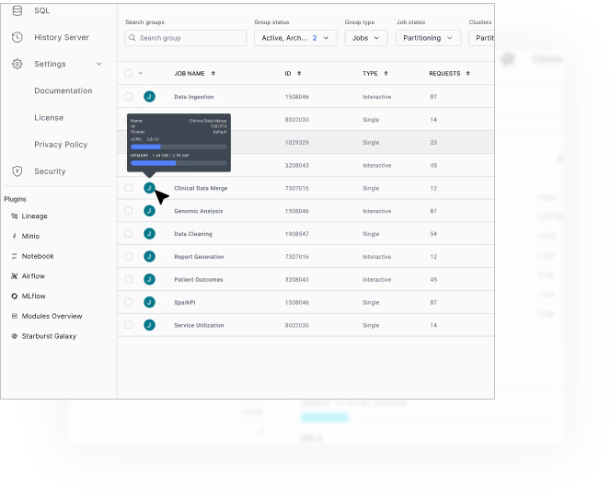
टीमों में बढ़ाया सहयोग
इलम का एकीकृत मंच साझा बुनियादी ढांचा प्रदान करके डोमेन के बीच की खाई को पाटता है जो स्थिरता और एकीकरण को बढ़ावा देता है। साथ ही, यह प्रत्येक डोमेन को अपने डेटा संचालन पर पूर्ण नियंत्रण बनाए रखने की अनुमति देता है, विशिष्ट व्यावसायिक आवश्यकताओं के साथ स्वायत्तता और संरेखण सुनिश्चित करता है। यह संतुलन सहयोग को बढ़ावा देता है, साइलो को कम करता है, और टीमों में उत्पादकता बढ़ाता है।
कहीं भी तैनात करें
इलम का लचीला आर्किटेक्चर क्लाउड, ऑन-प्रिमाइसेस और हाइब्रिड वातावरण में तैनाती का समर्थन करता है, जिससे यह किसी भी संगठनात्मक सेटअप के अनुकूल हो जाता है। यह सुनिश्चित करता है कि डेटा मेष को मौजूदा बुनियादी ढांचे की परवाह किए बिना मूल रूप से लागू किया जा सकता है, जो व्यावसायिक आवश्यकताओं को विकसित करने के साथ मापनीयता और संगतता प्रदान करता है।
मुफ़्त में शुरू करें
हमारी सभी सुविधाओं का आनंद लें कोई कीमत नहीं. अद्वितीय आवश्यकताओं वाले व्यवसायों के लिए, हम आपकी आवश्यकताओं के अनुरूप अनुरूप योजनाएँ प्रदान करते हैं।

Data Product Standards & Specifications
Successful data mesh implementation requires clear data product specifications that define quality, discoverability, and interoperability standards across all domains.
🔍 Discoverability Requirements
Data products must include comprehensive metadata: schema definitions, data lineage, business glossary terms, ownership information, and usage examples. Implement data catalogs with search and recommendation capabilities.
📊 Quality & SLA Standards
Define measurable quality metrics: completeness, accuracy, timeliness, and consistency. Establish SLAs for data freshness, availability (99.9% uptime), and response time (<2s for queries). Monitor and alert on violations.
🔒 Security & Compliance
Implement role-based access control, data classification (public, internal, restricted), encryption at rest and in transit, and audit logging. Ensure GDPR, CCPA, and industry-specific compliance requirements.
Data Mesh Implementation Roadmap
A systematic approach to migrating from centralized data platforms to domain-oriented data mesh architecture with measurable milestones.
🎯 Phase 1: Foundation (Months 1-3)
Identify domain boundaries, establish data product standards, set up self-serve infrastructure platform. Begin with 1-2 pilot domains. Define governance framework and quality metrics.
🏗️ Phase 2: Platform Development (Months 4-8)
Build self-serve data infrastructure, implement data catalog, establish CI/CD pipelines for data products. Migrate pilot domains, train domain teams, establish support processes.
📈 Phase 3: Scale & Optimize (Months 9-18)
Onboard remaining domains gradually, optimize platform based on feedback, establish cross-domain data sharing patterns. Monitor adoption metrics and business impact continuously.
Real-World Data Mesh Success Stories
Learn from organizations that have successfully implemented data mesh principles with concrete metrics and domain boundary examples.
🚗 Mobility Platform Case Study
A ride-sharing company implemented data mesh with domains for Rider Experience, Driver Operations, and Financial Analytics. Result: 60% reduction in data request fulfillment time, 45% improvement in data quality scores.
🏪 E-commerce Domain Structure
Retail giant organized domains around Customer Journey, Inventory Management, and Marketing Analytics. Each domain serves 15-25 data products. Achieved 70% faster feature development and 80% reduction in data incidents.
🏦 Financial Services Transformation
Bank restructured around Risk Management, Customer Analytics, and Transaction Processing domains. Implemented federated governance for regulatory compliance. Reduced time-to-market for new data products by 55%.
Implementing Data Mesh with Ilum
Ilum's modular architecture और Kubernetes-native design provide the perfect foundation for data mesh implementation. Enable domain teams with self-serve infrastructure while maintaining federated governance और data product standards.
🔧 Self-Serve Data Infrastructure
Ilum provides centralized services for data management including storage, orchestration, ingestion, transformation, cataloging, and monitoring - all accessible via self-service APIs and interfaces.
🏗️ Domain-Driven Architecture
Kubernetes namespaces enable domain isolation with resource allocation, RBAC integration, and independent scaling. Each domain maintains full autonomy over their data operations.
📊 Federated Governance
Implement consistent data standards, quality metrics, and compliance policies across domains while allowing flexibility in implementation approaches and technology choices.
Data Mesh Implementation FAQ
Comprehensive answers to common questions about data mesh adoption, implementation challenges, and best practices.
❓ When should I adopt data mesh?
Consider data mesh when: (1) Your data platform team becomes a bottleneck, (2) Domain teams lack context about their data, (3) Data quality issues arise from centralized processing, (4) You have >50 data consumers across multiple business domains, (5) Traditional data governance creates more overhead than value.
🔄 How does data mesh scale?
Data mesh scales horizontally through domain proliferation. Each new domain independently manages its data products using self-serve infrastructure. Network effects emerge as domains consume each other's data products, creating a marketplace of trusted data assets.
🎯 What makes data mesh successful?
Success factors: (1) Executive sponsorship for organizational change, (2) Investment in self-serve platform capabilities, (3) Clear data product standards and governance, (4) Domain team training and support, (5) Gradual migration rather than big-bang approach, (6) Measuring business impact, not just technical metrics.
🏗️ How do I identify domain boundaries?
Use Domain-Driven Design principles: (1) Align with business capabilities and organizational structure, (2) Identify natural data ownership patterns, (3) Look for bounded contexts where teams have end-to-end responsibility, (4) Consider data usage patterns and consumer needs, (5) Ensure domains can operate independently.
💰 What's the ROI of data mesh?
Typical ROI includes: (1) 40-70% faster time-to-market for data products, (2) 50% reduction in central platform team workload, (3) 30-60% improvement in data quality through domain expertise, (4) Reduced operational costs through domain autonomy, (5) Improved business agility and decision-making speed.
⚠️ What are common implementation pitfalls?
Avoid these mistakes: (1) Implementing technology without organizational change, (2) Creating too many small domains without clear boundaries, (3) Insufficient investment in self-serve platform, (4) Lack of data product standards, (5) Missing federated governance framework, (6) Trying to migrate everything at once.
Data Mesh Readiness Assessment
Evaluate your organization's readiness for data mesh implementation across key dimensions: organizational maturity, technical capabilities, and cultural alignment.
🏢 Organizational Readiness
**High:** Clear domain boundaries, autonomous teams, business-driven data needs. **Medium:** Some domain structure, mixed autonomy, growing data complexity. **Low:** Centralized decision-making, unclear ownership, simple data needs. Recommendation: Start with pilot domains if Medium/High.
🔧 Technical Capabilities
**High:** Cloud-native infrastructure, containerization, APIs, DevOps culture. **Medium:** Some cloud adoption, basic automation, mixed practices. **Low:** On-premise legacy, manual processes, limited API usage. Recommendation: Invest in self-serve platform before scaling domains.
👥 Cultural Alignment
**High:** Product mindset, cross-functional teams, data-driven culture. **Medium:** Growing product thinking, some collaboration, increasing data literacy. **Low:** Project-based delivery, siloed teams, limited data awareness. Recommendation: Focus on change management and training.
इलम को सुधारने के लिए कुछ विचार हैं?
हम आपकी प्रतिक्रिया को महत्व देते हैं और हमेशा सुधार करने के लिए उत्सुक हैं। अगर आपके पास ऐसे सुझाव हैं जो आपके अनुभव को बेहतर बना सकते हैं या उत्पाद को नेविगेट करना आसान बना सकते हैं, तो कृपया हमें बताएँ. हमारे मंच के भविष्य को आकार देने में हमसे जुड़ें! आपका इनपुट मायने रखता है।
सुविधा अनुरोध जोड़ें🏗️ Built for Decentralization
Ilum's Kubernetes-native architecture supports domain-driven design with namespace isolation, independent scaling, and resource management for true decentralized data ownership.
🔗 Unified Data Access
Seamlessly integrate with S3, HDFS, Delta Lake, Iceberg, and other storage solutions. Provide universal data access across domains while maintaining security and governance.
📈 Scalable & Modular
Start with a single domain and scale your data mesh architecture organically. Ilum's modular platform grows with your organizational needs and domain complexity.